
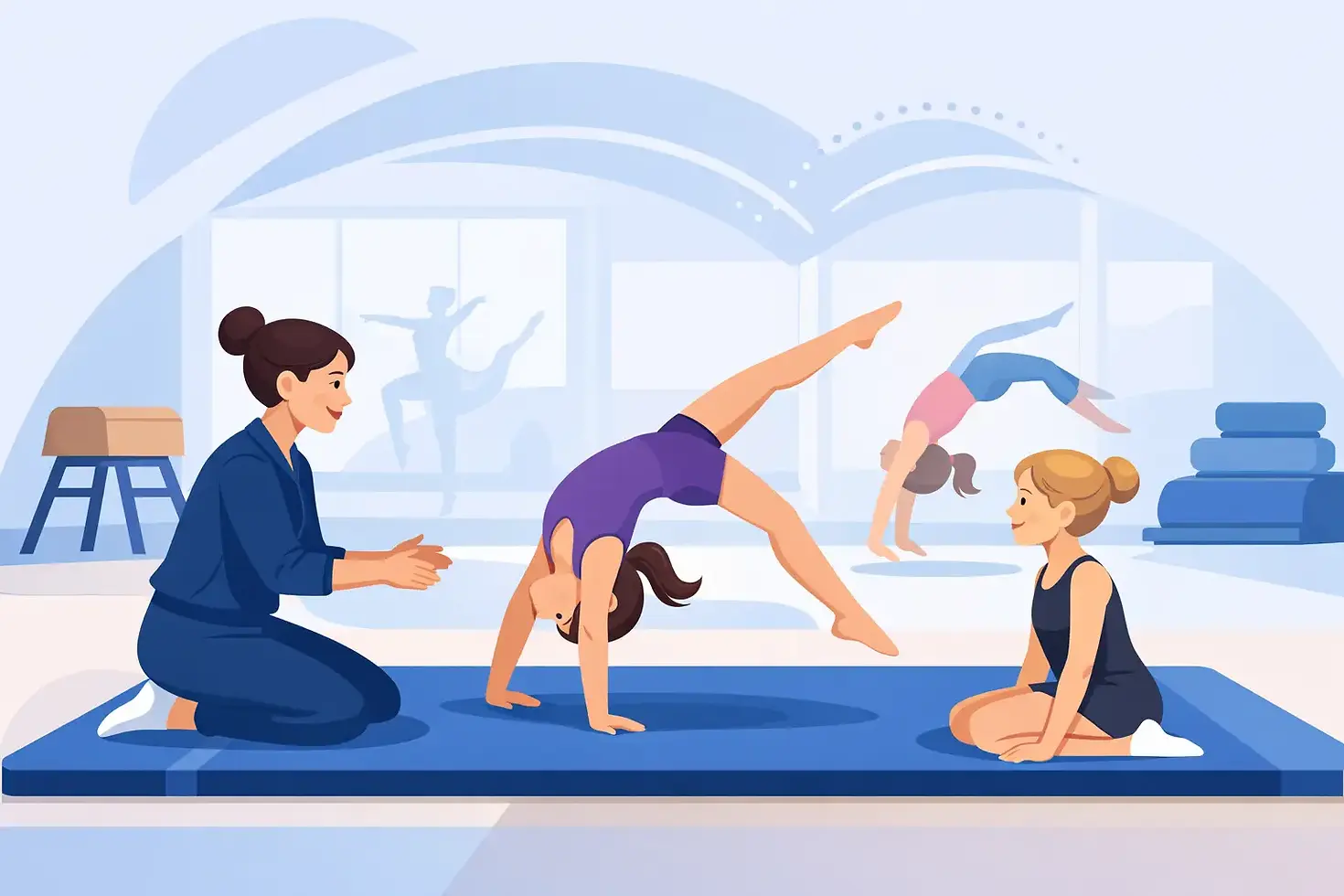
Why Tumbling Classes for Dancers Matter
A clean aerial is impressive. A controlled back walkover that lands on count is more than impressive - it shows training. For dancers who want stronger tricks, sharper transitions, and more confidence moving through space, tumbling classes for dancers offer targeted development that regular technique class often does not cover on its own.
The value is not only in learning acro skills. Done properly, tumbling supports body awareness, coordination, upper-body strength, core control, and dynamic movement quality. For young dancers, that can mean faster comfort with inversions and floor work. For serious students, it can add versatility without pulling focus from strong technical foundations.
What tumbling classes for dancers actually teach
A dance-based tumbling class is not the same as competitive gymnastics training, and that distinction matters. The goal is not simply to collect tricks. The goal is to develop strength, alignment, timing, and control in ways that serve dance performance.
In a well-structured class, students work through foundational progressions before moving to more advanced skills. That may include forward and backward rolls, cartwheels, handstands, bridges, limbers, walkovers, and front or back handspring preparation depending on age, strength, and experience. Flexibility is part of the work, but it is paired with stability so dancers are not just mobile, but supported.
For dancers, the best tumbling instruction also pays attention to presentation. Lines, pointed feet, body placement, and clean finishes matter. A skill may be technically possible, but in a dance setting it also needs to look polished and intentional.
Why dancers benefit from tumbling training
Many parents first look for tumbling because a child wants to learn an acro trick. That is a reasonable starting point, but the real benefit tends to be broader. Tumbling can strengthen the physical qualities that help dancers across multiple styles, including contemporary, jazz, musical theater, and commercial choreography.
A dancer who tumbles often develops better spatial awareness. That shows up in turns that feel more centered, jumps that travel with more confidence, and transitions to and from the floor that look less hesitant. Tumbling also asks dancers to organize the body quickly under pressure. That kind of coordination has real crossover value in choreography where timing and directional changes happen fast.
There is also a confidence component. Inversions and weight shifts can feel intimidating at first. When students learn them progressively, they begin to trust their training. That confidence can carry into auditions, rehearsals, and performance settings where adaptability matters.
For ballet students in particular, tumbling should complement rather than compete with classical training. It will not replace the precision of barre work, placement, or épaulement. What it can do is build athletic responsiveness and movement range that support a more versatile dancer, especially for students who perform or cross-train in multiple genres.
The difference between useful cross-training and distracting add-ons
Not every extra class improves a dancer's training. Some additions create fatigue without real technical gain. That is why tumbling has to be approached as a disciplined supplement, not a novelty.
The strongest programs teach progressions carefully and place equal value on conditioning, drills, and proper mechanics. If a class spends all its time rushing toward flashy skills, dancers may gain a trick but lose clean technique or expose themselves to unnecessary risk. For serious students, that trade-off is rarely worth it.
Useful cross-training should answer a practical question: does this make the dancer stronger, more coordinated, or more capable in performance? With tumbling, the answer can absolutely be yes, but only when the instruction is structured and level-appropriate.
This is especially important for ballet families. Students in rigorous ballet training already manage demanding schedules. They need supplemental classes that add measurable value, not random wear and tear. A well-run tumbling class improves strength and movement quality. A poorly structured one can leave a student overtired, overstretched, or working beyond safe readiness.
Who should take tumbling classes for dancers
Tumbling is a strong fit for several types of students. Young dancers often benefit because they build coordination and fear management early. Recreational dancers enjoy the energy and variety it brings to weekly training. Pre-professional students may use it to expand versatility for contemporary work, choreography, or audition settings where acrobatic elements appear.
That said, readiness depends on the student. Age alone does not determine placement. A younger child with focus, body awareness, and listening skills may be ready for introductory tumbling. An older dancer may need to start at a beginner level if they are new to inversions or lack upper-body strength.
The best class placement considers maturity, physical control, flexibility, and the ability to follow corrections. Students progress more successfully when they are challenged, but not rushed.
What parents should look for in a tumbling program
Parents do not need to be experts in acro technique to recognize quality. Start with structure. A strong program has clear levels, defined skill progressions, and instructors who emphasize mechanics before difficulty.
Watch how corrections are given. Serious instruction is specific. Teachers should address hand placement, shoulder engagement, core control, landing position, and safe entry and exit from each skill. If the atmosphere is energetic but still disciplined, that is a good sign.
It also helps to look for a program housed within a broader training environment that respects dance technique. For dancers, tumbling works best when it is integrated into a school culture that values progression, consistency, and long-term development. At an institution such as Master Ballet Academy, that kind of structure supports students who want more than a casual drop-in class.
How tumbling fits into a serious dance schedule
More is not always better. A dancer taking multiple ballet classes, rehearsals, pointe, and contemporary may not need several tumbling sessions each week. In many cases, one well-taught class is enough to build strength and skill without compromising recovery.
Students preparing for a specific choreography need or acro goal might train more frequently for a period of time, but scheduling should be deliberate. Sore wrists, tight shoulders, and lower-back fatigue can affect other classes if the training load is not managed carefully.
For younger students, consistency usually matters more than intensity. One class each week over time often produces better results than an occasional burst of overtraining. For older dancers, the right balance depends on current technique demands, performance season, and overall conditioning.
Common mistakes dancers make in tumbling
One of the most common mistakes is trying to skip progressions. Social media makes advanced skills look quick to learn, but strong tumbling is built through repetition, conditioning, and technical patience. A dancer who pushes for an aerial before mastering handstand control and walkover mechanics usually creates frustration, not progress.
Another mistake is assuming flexibility is enough. Many dancers are naturally mobile, but tumbling also requires strength through the shoulders, back, core, and legs. Without that support, flexible students can collapse into skills rather than execute them cleanly.
The third mistake is treating tumbling as separate from artistry. In performance, an acro element should not interrupt the choreography. It should match musical timing, movement texture, and stage presence. That is why dancers need instruction that values both mechanics and presentation.
When tumbling is worth adding
If a dancer wants to improve acro-based skills, gain confidence with floor work, or broaden versatility for choreography and performance, tumbling can be an excellent addition. It is especially valuable when the student is motivated, coachable, and ready to train systematically.
If the dancer is already overloaded, recovering from injury, or struggling with consistency in primary technique classes, the timing may not be right. Supplemental training works best when the foundation is stable. In those cases, strengthening core dance technique first may produce better long-term results.
The right decision depends on the dancer's goals. For some, tumbling is a fun and productive complement. For others, it becomes a meaningful part of becoming a more capable performer.
The strongest dancers are not built by chasing every skill. They are built by training with purpose, choosing the right disciplines, and progressing in the right order. When taught with structure and high standards, tumbling can be one of the smartest additions to a dancer's education.


Comments