
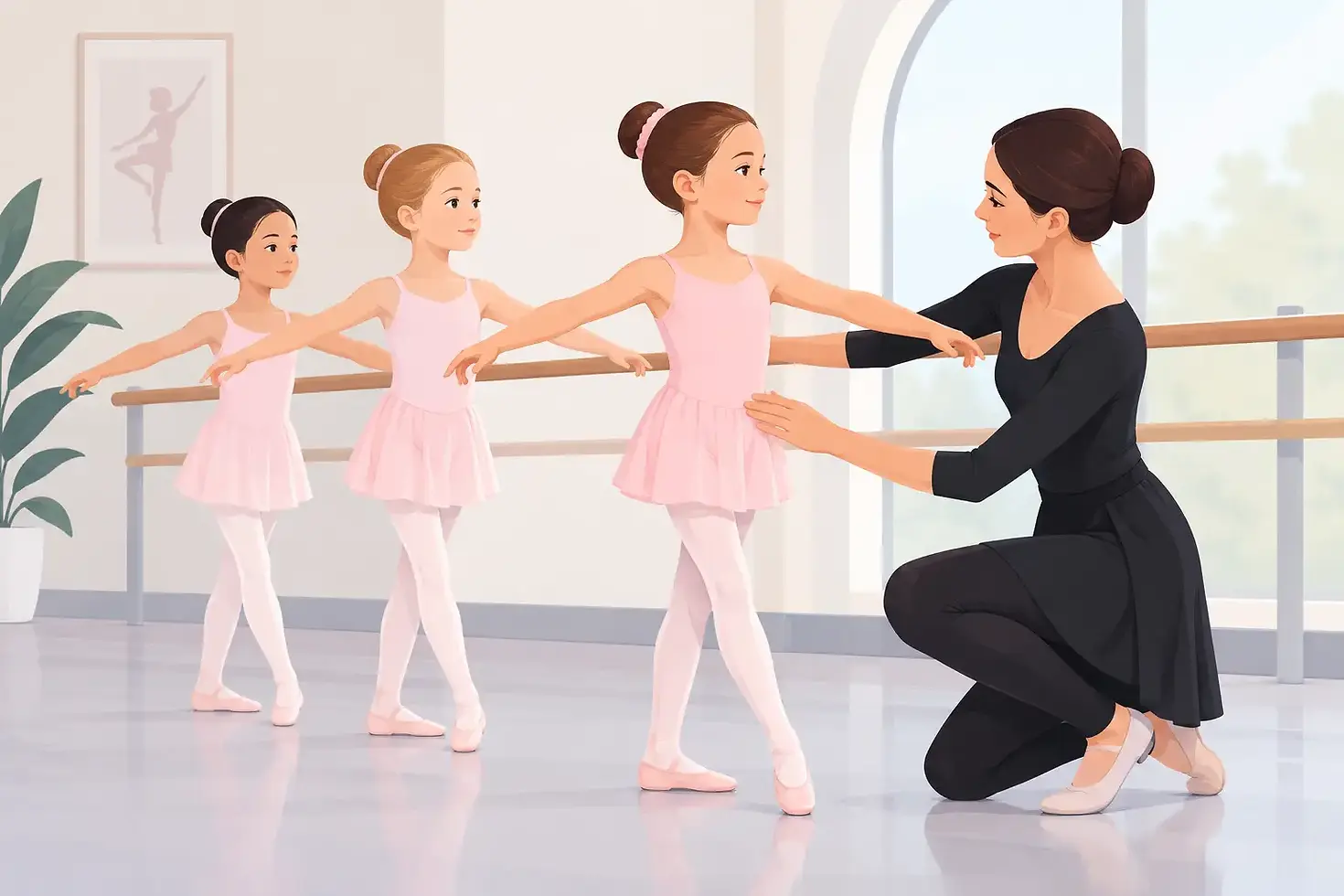
Children Ballet Classes: Building Technique Early
A child's first ballet class can shape far more than a weekly activity. The right children ballet classes establish habits of listening, posture, musical awareness, and focused effort at an age when movement is still instinctive. For families, the goal is not to rush a young dancer toward advanced training. It is to choose an environment where instruction is age-appropriate, orderly, and built around a clear progression.
At Master Ballet Academy, students can begin their dance education early and continue through increasingly rigorous levels as their strength, discipline, and commitment develop. That progression matters. Ballet is a technical art form, and strong foundations make future training more productive, more confident, and safer.
What Children Ballet Classes Should Teach First
A quality beginner class does not begin with difficult steps or expectations beyond a child's developmental stage. It begins with body awareness. Young dancers learn how to stand tall, point and flex their feet, recognize right and left, move to a musical count, and follow a teacher's direction within a group setting.
For preschool-aged children, imaginative movement may be part of the instruction, but it should serve a purpose. Pretending to float like a swan or march like a toy soldier can help a child understand lightness, rhythm, direction, and control. As students mature, the class should gradually place greater emphasis on proper ballet vocabulary, coordinated arm positions, turnout awareness, and precise placement.
Good early instruction also teaches dancers how to work in a studio. They learn to wait for their turn, watch a demonstration, remember combinations, and respond to correction. These are small but meaningful lessons. They prepare children for the concentration required in higher-level ballet training and in school, sports, and other structured activities.
Choosing the Right Level for Your Child
Age is an important starting point, but it is not the only consideration. A child who is new to dance generally benefits from a class designed for beginners, even if they are slightly older than many classmates. A student with prior training may be ready for a more technically focused level, provided their placement reflects real skill and readiness rather than enthusiasm alone.
Parents should look for a school with defined levels rather than a broad class labeled only by age. Clear placement helps each dancer receive appropriate instruction. In a well-organized program, students advance when they demonstrate the coordination, focus, strength, and technical understanding needed for the next stage.
For younger students, a shorter class may be the best fit. A two- or three-year-old is still learning how to participate in a group lesson, while an elementary-aged dancer can typically handle more detailed exercises and longer combinations. The right challenge keeps a child engaged without creating frustration.
It also helps to distinguish between a recreational introduction and a student who may want a more serious path. Both belong in a respected academy. Not every child needs to train for a professional future, but every child deserves accurate instruction and the opportunity to develop with care.
Signs a Class Is Properly Structured
A strong children’s ballet program has a visible framework. Classes begin and end with purpose, teachers give corrections in clear language, and students are encouraged to improve rather than simply complete an activity. Young dancers should leave class feeling proud, but they should also understand that ballet requires attention and practice.
Look for instruction that emphasizes alignment and safe movement from the beginning. Teachers should never force turnout, oversplits, or flexibility beyond what a child can achieve naturally. Ballet builds mobility and strength over time. Fast results may look appealing, but controlled development protects the dancer’s body and supports lasting technique.
Class size and teacher attentiveness matter as well. Children need enough individual feedback to understand how to improve, particularly as they begin learning foundational positions and steps. A teacher who can maintain a positive, focused room while noticing each student’s needs creates the conditions for real progress.
The Value of Classical Ballet Training
Ballet remains one of the strongest technical foundations for young dancers, including those who later explore contemporary, jazz, musical theater, or other dance styles. Its structure develops balance, coordination, flexibility, musical phrasing, and the ability to move with intention.
Classical training also gives students a shared language. Terms such as plié, tendu, relevé, and arabesque allow teachers to build increasingly complex combinations without losing clarity. Over time, students learn that a movement is not merely something to copy. It has a name, a shape, a rhythm, and a technical purpose.
For families considering a serious training track, the teaching method and faculty standards become especially significant. Classical Vaganova-based instruction, for example, is known for developing coordinated use of the whole body, expressive upper-body work, strong legs and feet, and disciplined technical progression. The method is demanding, but its structure can be highly rewarding for students who are ready to work consistently.
That does not mean a young beginner needs to understand every technical detail immediately. Early ballet should be encouraging and enjoyable. The distinction is that enjoyment comes from achievement: learning a new step, remembering a combination, improving a balance, or performing with confidence.
When Should a Child Start Ballet?
Many children can begin age-appropriate movement and pre-ballet classes around age two or three. At this stage, the purpose is to develop coordination, rhythm, social confidence, and a positive relationship with movement. Parents should expect short attention spans and gradual growth, not formal technical mastery.
By the early elementary years, students are often ready for more defined ballet instruction. They can retain terminology, understand basic alignment, and work through longer exercises. This is an excellent time to establish dependable class attendance and practice habits.
Older beginners should not assume they have missed their opportunity. Starting later may require patience, particularly for students interested in intensive classical training, but older children often bring stronger focus and a clearer desire to learn. Honest placement and consistent attendance matter more than comparing a new student to someone who began years earlier.
Supporting Progress Outside the Studio
Parents do not need to become ballet teachers at home. Their most valuable role is practical and consistent: help your child arrive on time, wear the required attire, bring neatly secured hair when requested, and approach class as a commitment rather than an optional playdate.
Regular attendance is one of the biggest predictors of progress. Ballet builds sequentially. When a student misses class frequently, they may miss vocabulary, corrections, or combinations that later lessons assume they know. A single missed class is not a problem, but a pattern of irregular attendance makes advancement more difficult.
At home, encourage your child to speak about what they learned rather than asking only whether class was fun. Questions such as “What new step did you practice?” or “What did your teacher help you improve?” reinforce that ballet is a skill developed through attention. Praise effort, resilience, and focus as much as natural ability.
Avoid pushing extra stretching or advanced online tricks. Young bodies are still growing, and unsupervised training can create poor habits. If a child wants to do more, ask their teacher whether there are safe exercises, additional classes, or age-appropriate summer programs that fit their level.
Performances, Goals, and the Next Step
Performance opportunities can give children a meaningful reason to apply what they have learned. Rehearsing for a showcase or ballet production teaches responsibility, spacing, stage awareness, and teamwork. It also lets families see the discipline behind the final performance.
Still, performance should complement training, not replace it. A program focused only on costumes and recital routines may leave students with limited technical development. The strongest schools balance performance experience with year-round classes that continue to build technique.
As dancers grow, some will be ready for additional weekly classes, summer intensives, specialized disciplines, or auditions for selective programs. Others will choose ballet as a focused artistic outlet alongside school and other commitments. Both paths can be valuable when the training environment respects each student’s level and goals.
The best time to begin is when your child is ready to participate, listen, and try. Give them a studio where standards are clear, encouragement is genuine, and every class offers one more opportunity to stand a little taller, move with greater purpose, and earn the next step.


Comments