
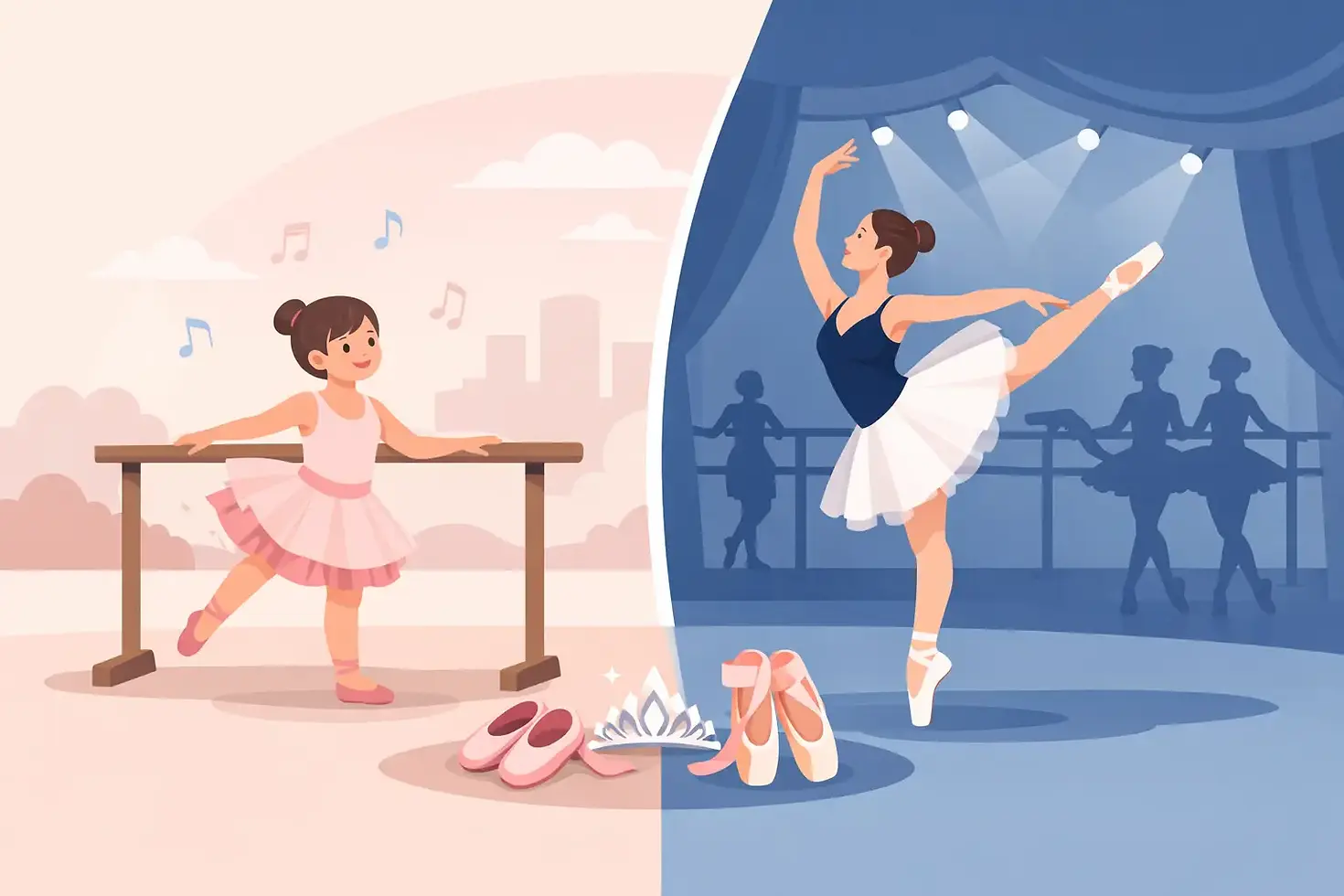
Recreational or Pre Professional Ballet Options
A dancer who loves class twice a week does not need to prove a career goal. A dancer who is ready to train seriously should not be held back by a schedule designed only for casual participation. Choosing recreational or pre professional ballet is about placing each student in an environment that matches their current commitment, technical readiness, and long-term ambitions.
For Scottsdale and Phoenix-area families, the strongest choice is rarely about labels alone. It is about whether a program provides the right level of instruction, accountability, performance experience, and room to advance.
Recreational or Pre Professional Ballet: The Core Difference
Recreational ballet is structured training for students who want the discipline, artistry, and physical benefits of classical dance without making ballet the center of their weekly schedule. These students may be young beginners, school-age dancers balancing other activities, teens returning to dance, or adults seeking serious instruction in a welcoming class setting.
A pre-professional program is designed for students who have demonstrated the potential, work ethic, and commitment required for advanced classical training. It is not simply “more ballet.” It is a focused educational track with greater training frequency, higher technical expectations, a formal progression, and meaningful preparation for auditions, intensive programs, college dance opportunities, and professional pathways.
Both paths have value. The right decision depends on what a dancer needs now, not on pressure to choose the most demanding option as early as possible.
What Recreational Ballet Should Offer
Recreational training should still be taught with standards. Students benefit from correct placement, musicality, coordination, vocabulary, and an understanding of ballet’s discipline from their earliest classes. A recreational program should never treat technique as optional simply because a student is not pursuing a professional future.
For younger children, the priority is building enthusiasm alongside age-appropriate structure. They learn how to listen, follow combinations, work within a group, and move with increasing control. As students grow, recreational ballet can provide a consistent foundation while allowing room for school, sports, family commitments, and other interests.
Older recreational students often value ballet for different reasons. Some enjoy the precision and challenge of classical technique. Others want the confidence that comes from performing, improving flexibility and strength, or returning to an art form they studied earlier in life. Adults, in particular, deserve instruction that respects both their goals and their bodies, without assuming that a beginner class must be casual or unchallenging.
A quality recreational track includes clear level placement and faculty who correct students thoughtfully. It may also offer performance opportunities, which give dancers a purpose for refining their work and let families see the results of sustained training. The schedule is generally more flexible than a pre-professional program, but the expectation remains the same: arrive prepared, pay attention, and progress with intention.
When Pre-Professional Ballet Is the Better Fit
Pre-professional ballet becomes appropriate when a student is prepared to make training a major priority. This often includes multiple weekly ballet classes, supplementary conditioning or cross-training, rehearsals, and a willingness to receive detailed corrections. Advanced students may also train in pointe, men’s technique, contemporary, character, jazz, or other complementary disciplines based on their level and goals.
Readiness is not determined by enthusiasm alone. A student may adore ballet and still benefit from more time in a recreational or lower-level training program. Faculty consider technical foundation, physical development, focus in class, attendance, musical awareness, coachability, and consistency. At advanced levels, the ability to apply corrections from one class to the next matters as much as natural facility.
Audition-based entry is valuable because it protects the integrity of the training environment. It helps ensure that dancers are placed where they can be challenged safely and productively, rather than being advanced because of age, friendship groups, or family expectations. For serious students, training alongside peers with similar focus creates accountability and raises the quality of daily work.
Pre-professional students also need to understand the trade-off. This path requires more than talent and good intentions. It asks for dependable attendance, careful time management, adequate rest, and a family schedule that can support rehearsals, performances, and seasonal intensives. There will be demanding days. There will also be corrections that feel difficult. A student who responds with discipline and curiosity is often better positioned to grow than one who expects every class to feel easy.
Training Frequency Changes the Result
In ballet, consistency creates progress. One or two classes each week can build coordination and confidence, especially for beginning and recreational dancers. However, advanced technical development requires more frequent repetition. Strength, turnout control, alignment, foot articulation, balance, and artistic maturity develop through steady work over time.
This is why pre-professional programs typically require a more rigorous schedule. Pointe work, for example, should be introduced only when a dancer has the strength, alignment, and training consistency to approach it responsibly. More classes are not a shortcut to pointe or elite status. They are part of the preparation needed to support advanced work well.
Performance Is Part of the Education
Performing matters at every level, but its purpose changes as dancers advance. Recreational students gain confidence, learn stage awareness, and experience the satisfaction of contributing to a production. For pre-professional dancers, rehearsals and performances add another layer of education: learning choreography quickly, maintaining technique under pressure, working as an ensemble, and taking responsibility for professional conduct.
Students connected to a serious academy also benefit from seeing the standards of professional productions up close. At Master Ballet Academy, the affiliation with Phoenix Ballet gives dedicated students a meaningful connection to the expectations and artistry of the professional ballet world.
Questions Families Should Ask Before Choosing
The most useful conversation begins with the dancer, not with a desired title. Ask whether they look forward to additional classes or feel stretched by their current schedule. Consider whether they independently practice corrections, arrive ready to work, and show resilience when material becomes demanding. A child does not need to announce a future career plan to train seriously, but they should want the commitment that comes with the next level.
Families should also consider logistics honestly. A pre-professional schedule can be rewarding, yet it affects transportation, homework time, weekends, and family routines. Students need enough time to eat well, recover physically, and manage their academic responsibilities. If the schedule creates constant strain, a recreational placement may be the wiser choice for now.
It is equally important not to assume that recreational ballet is a lesser experience. A student can receive excellent instruction, form strong friendships, perform with pride, and carry the discipline of ballet into every part of life without pursuing a professional contract. The goal is not to make every dancer pre-professional. The goal is to offer each dancer training worthy of their effort.
Moving Between Training Paths
The decision is not permanent. A recreational student may become more focused over time and be ready to audition for a pre-professional track after building a stronger foundation. Conversely, an advanced dancer may need to reduce their schedule during a demanding academic period, after an injury, or while reassessing goals. Thoughtful placement should support progress, not create unnecessary pressure.
Parents can help by treating advancement as earned development rather than a race. The strongest dancers are often those who spent the necessary time learning fundamentals correctly. Clean technique, disciplined habits, and genuine respect for the art form remain valuable at every level.
Choose the program that gives your dancer enough challenge to grow, enough structure to build confidence, and enough support to keep returning to the studio ready to work.


Comments